Creditor Corner

The ultimate weekly source for great financial and restructuring news affecting creditor rights specifically curated for you

Weekly News – January 9

First Brands tees up sales process, Venny distressed opportunities abound, non-debtor releases in the spotlight, 2026 outlooks and so much more...

Creditor Corner

Your weekly curated content from the Creditor Rights Coalition

Over 3,500 member subscribers and growing!

We bring you exclusive content from leading data and research providers 

Sign Up Here

?In this Week's Creditor Corner

First Brands tees up sales process, Venny distressed opportunities abound, non-debtor releases in the spotlight, 2026 outlooks and so much more...

Featured Content

Bruce Richards on the Markets

Macro Outlook for 2026

Scroll through to read all of ou?r content?

Tweet of the week

First Brands throw down

In the news

now the fun begins.....

Click above to access content

One-time registration required

Featured Event

Register Now!

the next frontier in creditor on creditor violence

Click above to access content

Exclusive Content

Maduro out!

Click above to access content

Exclusive Content

...and Elliott in!

Click above to access content

One-time registration required

Exclusive Content

peering into the crystal ball

Click above to access content

One-time registration required

Exclusive Content

nondebtore releases in the spotlight

Click above to access content

Our take:

Nondebtor releases are back in the spotlight following the divergent outcomes in Gol (Judge Glenn) and Azul (Judge Lane). Notably, Gol marks the first district court decision post-Purdue to squarely address what constitutes “consent” to nondebtor releases—requiring creditors to affirmatively opt in to grant a third-party release. That framework strikes us as both sensible and consistent with first principles and we hope the 2nd Circuit agrees!

Data download

tight spreads and collapsing recoveries don't bode well for high yield...

Click above to access content

one-time registration required

Data download

weakening credit metrics and margin compression don't bode well for private credit...

Click above to access content

Featured Content

2026 Macro Outlook

1. Credit: Clip your cash flow, remain constructive With rates and equity volatility well contained, financial conditions loose, and earnings trending higher, we will likely see credit spreads remain stable. As a result, credit investors should earn a yield of 6.5% to 7%. High-yield spreads are relatively tight, sitting just inside +300 bps with a yield-to-worst of 6.6% for the HY Master Index. In 2025, BB's tightened 70 bps while CCC's widened 70 bps as the up-in-quality theme prevailed. In 2026, I expect HY bonds to trade with lower volatility as spreads grind slightly tighter in the coming months. HY investors may even see spreads tighten to their tightest level this century, touching +250 bps level, not seen since the GFC. The grind tighter combined with active new issuance should enable HY investors to earn their coupon plus 50 bps, or about 7%. Multi-asset public credit is the optimal way to invest across the public credit markets. The greatest risk factors for public credit investors are highlighted in my Top 10 Risk Factor list that I posted yesterday, but top of the list is an economic slowdown or significantly tighter financial conditions which are low probability events this year. 


2. Private Credit: Private credit should see a meaningful pickup in deal flow as PE has a banner year for buying/selling companies while asset owners and CapEx accelerate financing plans. This backdrop should keep private credit managers exceptionally busy throughout the year: direct lending, opportunistic credit, and asset-based lending strategies are well positioned to benefit from deal flow and improving credit conditions. Of course, strong sourcing channels and disciplined underwriting standards are key determinates for outcomes. These three core PC strategies should generate returns in the 10–12% range exhibiting materially lower volatility than public markets. Private Credit represents a stable asset class driven by idiosyncratic decisions and outcomes with risk-reward superior to the public debt and equity markets.


3. Rates: Front-end lower, long-end anchored The front end of the curve should continue to rally as the Fed eases policy and maintains purchases of short-term Treasuries. By contrast, longer-dated yields are likely to remain sticky, with the 10-year UST fairly valued in a 4.00%–4.25% range. A meaningful break lower in long rates would likely require the onset of QE program or inflation to settle in at ~2%. A dove will the reins in May who will make it his mission to lower rates in an effort to allow the economy to heat up. Rate volatility should continue to compress: the MOVE index, which has oscillated between 60 and 150 over the past three years, is likely to trade below 50 later this year. I expect the Fed to cut rates three times in 2026, bringing the policy rate towards its neutral level of ~3.0%. The risk to this scenario is higher inflation. 


4 . Equities: High valuations, range-bound returns, subdued volatility The S&P 500 enters the year trading at roughly 23.5x forward earnings, an elevated multiple by historical standards. As a result, returns are likely to be more range-bound despite a constructive macro backdrop. I expect the S&P 500 to trade between 6,500 (-5%) and 7,666 (+12%) over the course of 2026. Equity volatility should remain well behaved, with the VIX largely confined to a 10–20 range, likely drifting lower in the coming months. This contrasts sharply with last year, when the VIX spent most of the time between 15–25, spiking above 50 in April. In this environment, volatility-selling strategies are likely to underperform. Earnings growth of ~10% is achievable given continued economic strength, but upside equity returns may be limited given starting valuation levels. The two major risks to this scenario are significantly slower GDP growth and/or AI bubble that bursts. 


Conclusion: 2026 is shaping up less as a year for directional conviction and more as a test of portfolio construction discipline. With policy easing expected to be incremental and asset prices already reflecting a benign macro regime, the opportunity set will increasingly favor credit selection over beta. Capital allocators should prepare for an environment where carry, relative value, and structural inefficiencies matter more than broad market exposure, and where resilience to policy or inflation surprises is as important as upside participation. If volatility continues to compress, the real edge may come from building portfolios that can compound steadily, while remaining positioned for regime shifts that markets may be underpricing today.

To follow Bruce's thoughts on the markets, investing and more, follow

@bruce_markets

Upcoming Events

Register by clicking above

Morningstar Webinar: Private Credit Trends

January 12, 2026

Learn More

CreditSights Webinar: EMEA Levfin Outlook 2026

January 14, 2026

Learn More

AIRA & NYIC Luncheon: Bankruptcy & Fraud

January 21, 2026

Learn More

The Data Download

Bringing Transparency to the Bankruptcy Process

Click Above to Access The Data Download

Our Take:

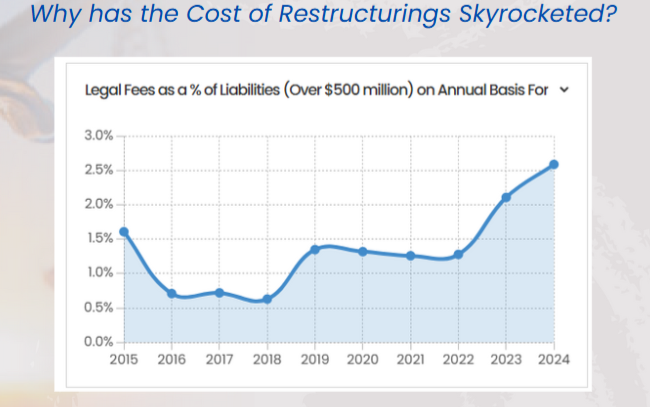
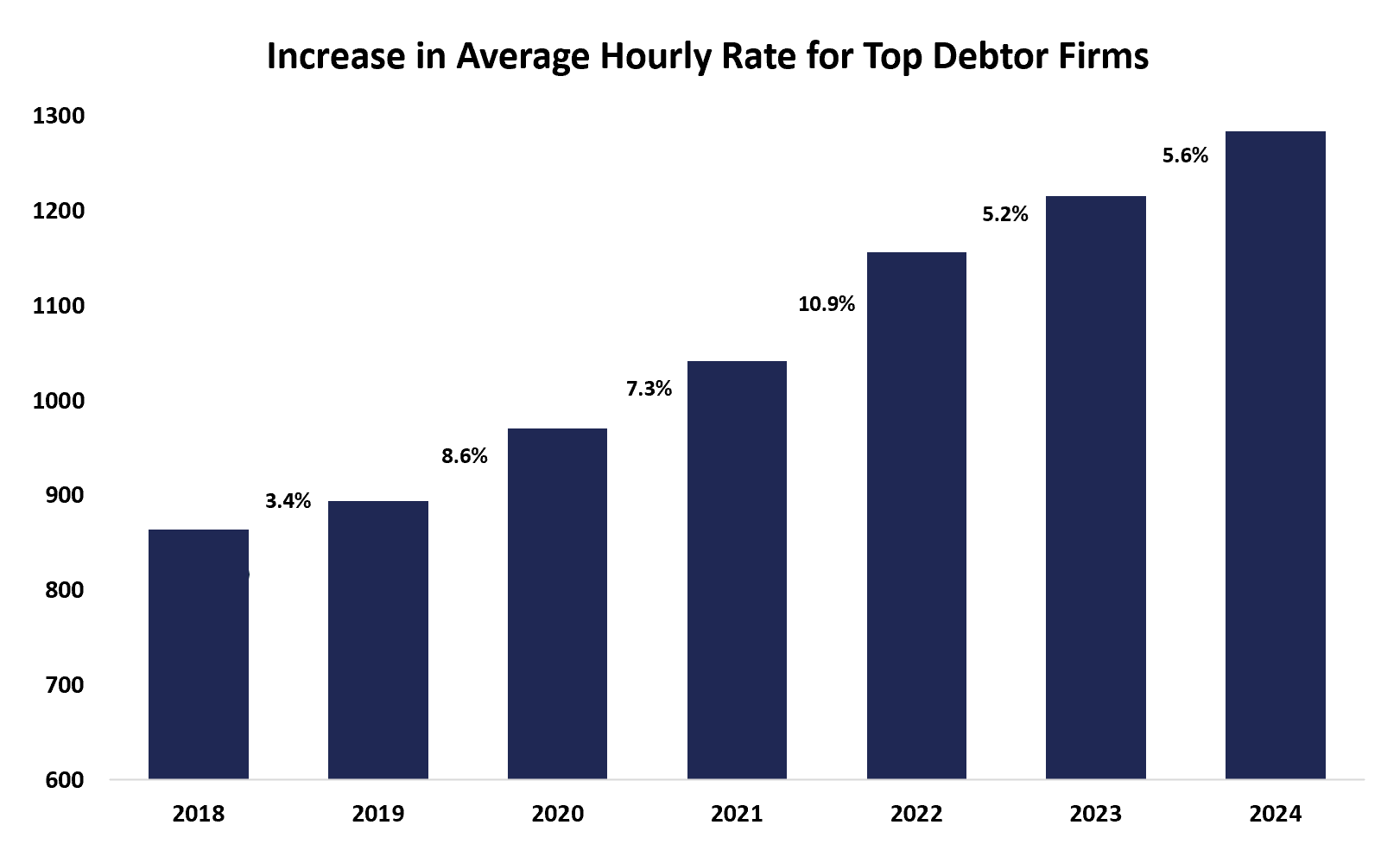
The Daily Cost of BK Legal fees Are Increasing.

Are we shocked? No.

We took a deep dive to see what is driving up the daily cost of restructurings and the culprit: Increasing Legal Hourly Rates. We analyzed final fee apps for top debtor law firms from 2018 to 2024 and found average hourly legal fees have increased by over 65% since 2018. Maybe a little bit of sunlight is the right disinfectant to help remedy the problem....

Have Something to Share?

Email us at info@creditorcoalition.org