Creditor Corner |
|
|
Your weekly curated content from the Creditor Rights Coalition |
Over 3,700 member subscribers and growing! We bring you exclusive content from leading data and research providers Sign Up Here |
In This Week’s Creditor Corner Brightline opens a new chapter, Cable One draws down its revolver, AMC enters the home stretch, Moody’s weighs in on the credit cycle, and will SCOTUS take up the Texas Two-Step? All this and more in this week’s Creditor Corner.
Featured Content Bruce Richards on The Markets The Fiscal Problem Is Not Going Away
|
Scroll through to read all our content |
|
|
|
Tweet of the Week |
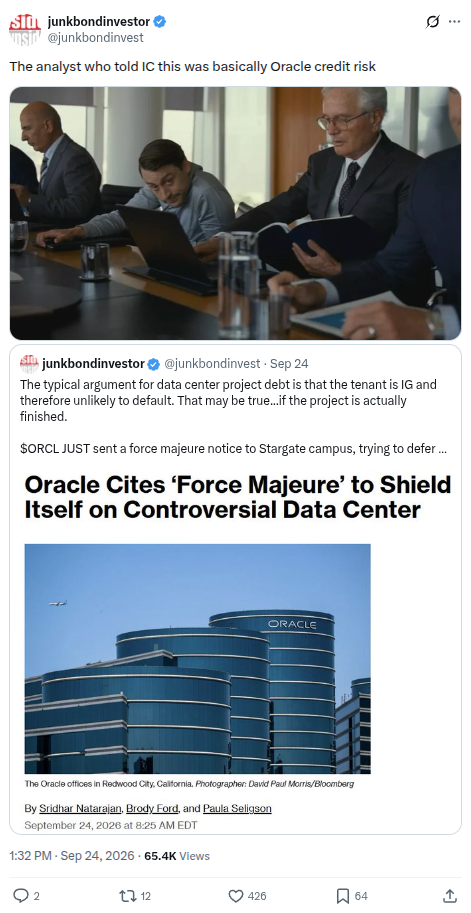 |
Click Above to Access Content |
|
|
|
|
|
Exclusive Content |
Brightline Opens a New Chapter |
 |
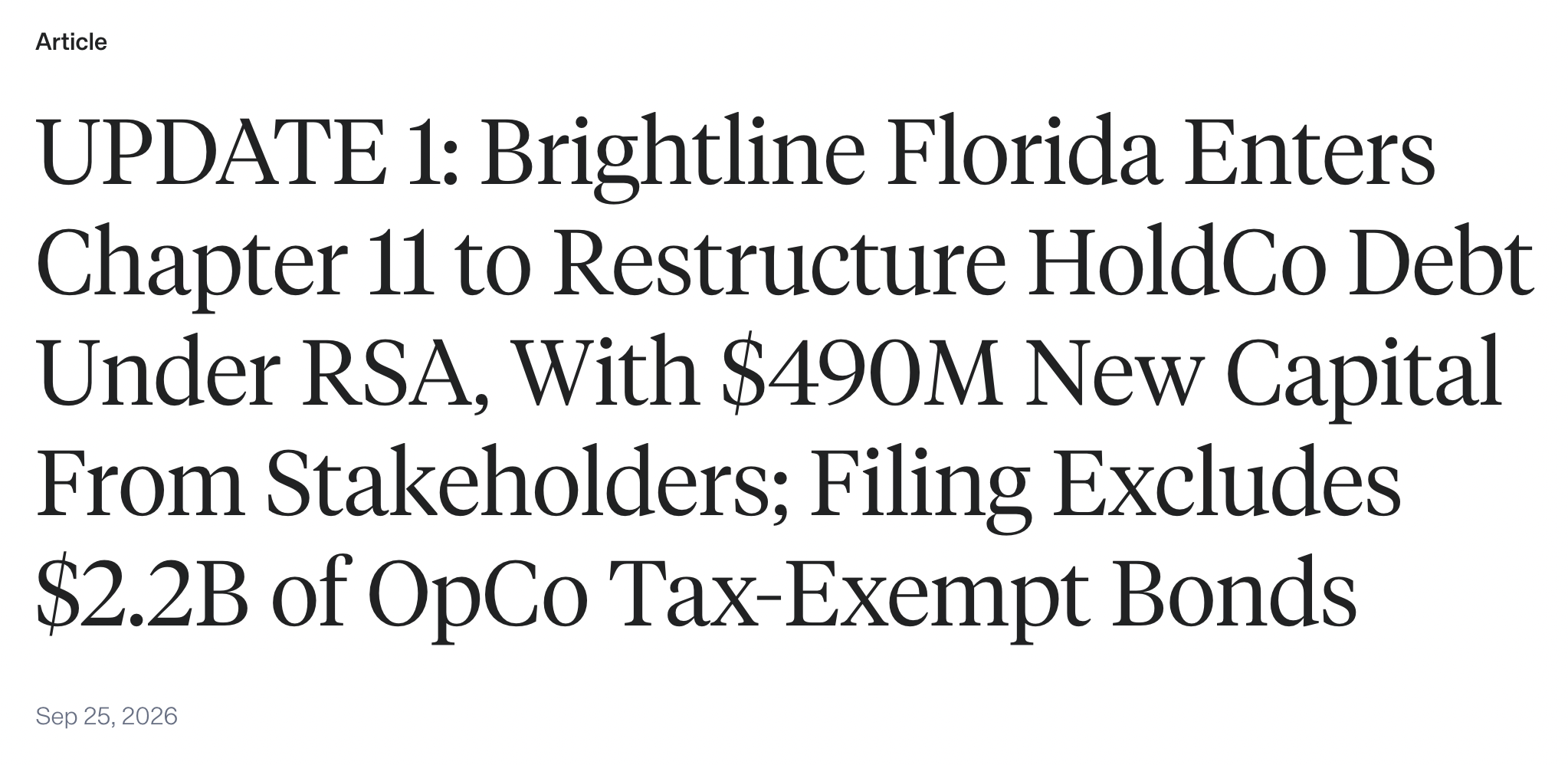 |
Click above to access content |
|
|
|
|
|
Exclusive Content |
Strange Way to Refi… |
 |
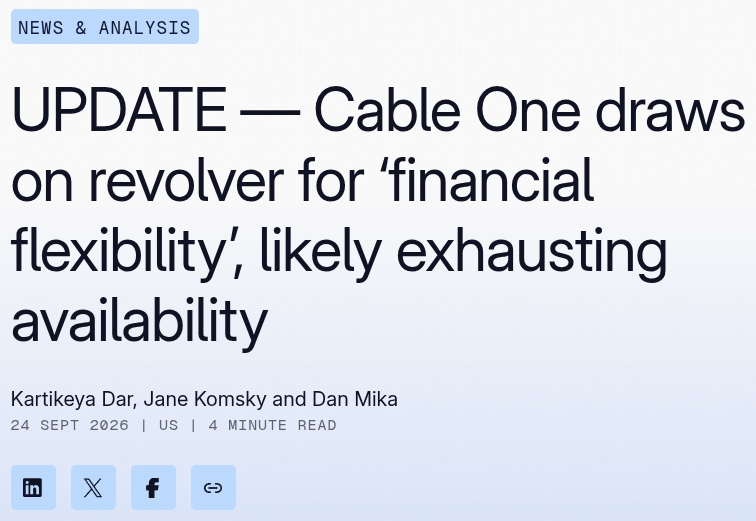 |
Click above to access content One-time registration required |
|
|
|
|
|
Exclusive Content |
Cinema Is Back and so Are AMC’s Margins |
 |
 |
Click above to access content One-time registration required |
|
|
|
|
|
Data Download |
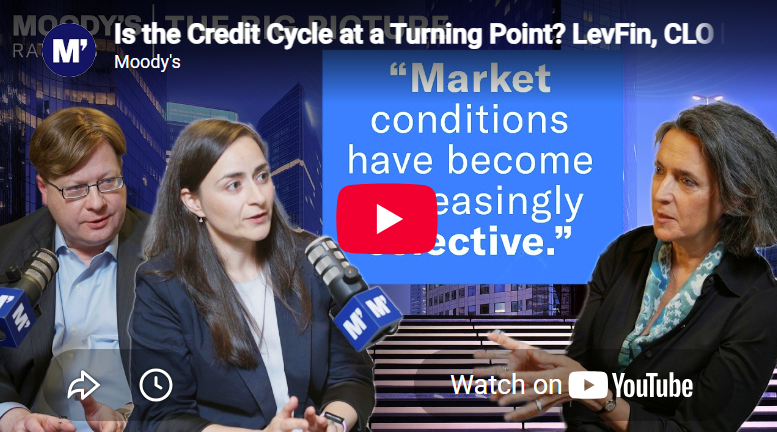
Bifurcation Is the Name of The Game |
 |
Click above to access content |
|
|
Our take: The credit cycle appears to be entering its late stage, with 2027–28 maturities approaching and bifurcation becoming increasingly pronounced. The credits that could be refinanced have been, while those left behind are quickly running out of options. CLOs are de-risking, BSL covenants are tightening, and capital is concentrating among large-cap lenders at the expense of weaker-capitalized middle-market lenders. Where do we go from here?
The combination of AI, sovereign debt, and poor price discovery fueled by private credit expansion creates the potential for a particularly distasteful convergence when the cycle turns. |
|
|
|
|
Featured Spotlight |
The GOAT Speaks Up |
 |
 |
Click above to access content |
|
|
|
|
|
Exclusive Content |
Brace for Impact |
 |
 |
Click above to access content One-time registration required |
|
|
|
|
|
Exclusive Content |
The Leak at 4th Circuit |
 |
 |
Click above to access content One-time registration required |
Our take: In his sharp 22-page dissent in Bestwall, Judge Robert B. King argued that the Texas Two Step deviates from bankruptcy’s core purpose while the majority let the controversial practice slide through….
We will be watching if the Supreme Court takes up the issue. |
|
|
|
|
|
Featured Content |
 |
The Fiscal Problem Is Not Going Away.
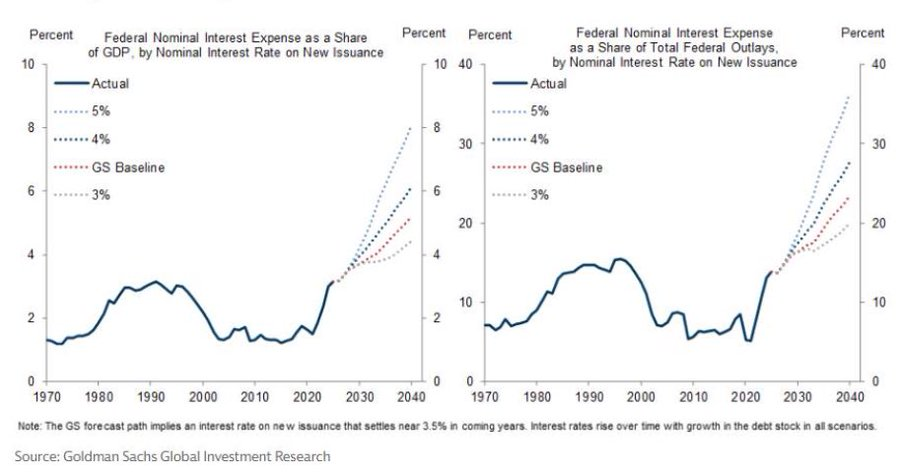
The U.S. fiscal deficit is now running at more than 6% of GDP, and we are approaching a new fiscal year with a massive financing requirement.
Washington is running a deficit of $2T, and the Treasury will continue issuing enormous amounts of new debt to finance that spending and refinance existing obligations.
This matters because deficits are not just a Washington problem. They are increasingly becoming a bond-market problem.
Massive government spending supports demand at a time when inflation remains above the Fed’s 2% target. That can make the Fed’s job more difficult: fiscal policy is pushing demand higher while monetary policy is trying to restrain it.
And there is another consequence too: Supply, a deluge of debt.
Investors will demand compensation for absorbing that supply, particularly when inflation remains elevated and the Fed is no longer providing the same support to the long end of the curve via QE.
The 10-yr UST move above 5%, levels not seen since 2007 is costly as you see in the chart below.
Higher Treasury yields mean higher borrowing costs for the government, corporations and consumers.
They also raise the discount rate applied to equities, reducing the present value of future cash flows.
This creates a difficult feedback loop: more spending requires more borrowing, more borrowing requires more Treasury issuance, and more supply can require higher yields.
Higher yields then increase the government’s interest expense, creating even more pressure on the deficit.
Where has fiscal discipline gone?
For credit investors, there is a silver lining: higher base rates mean higher income for lenders and savers.
In a higher-for-longer world, the winners will be lenders who focus on companies with strong cash flow, conservative leverage, solid covenants and the ability to grow through the cycle.
|
 |
Click above to access content To follow Bruce’s thoughts on the markets, investing and more, follow @bruce_markets |
|
|
|
|
Data Download |
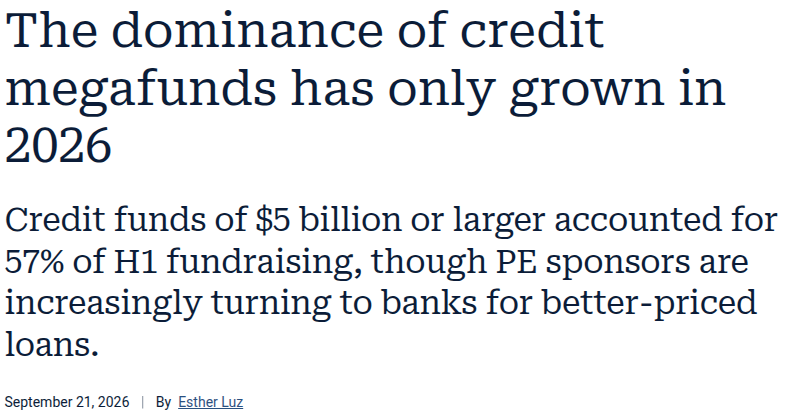
Concentration and Competition |
 |
 |
Click above to access content |
|
|
“It’s fair to say we’ve gone from a period where private credit has been a clearer choice to now it being much more of a debate.” – David Ridley, partner and co-head of US private credit and direct lending practice at White & Case |
|
|
|
|
|
|
 |
 |
CliffordChance: US Private Credit in Europe – Navigating Cross-Border Lending |
October 6, 2026 |
| Learn More |
|
|
|
|
 |
Annual NCBJ Conference: Honoring Our Past, Shaping Our Future |
October 7-10, 2026 |
| Learn More |
|
|
|
|
|
|
 |
Restructuring in the Americas |
October 15, 2026 |
| Learn More |
|
|
|
|
 |
INSOL International: Singapore’s Latest Insolvency Reforms |
October 30, 2026 |
| Learn More |
|
|
|
|
|
|
 |
TMA NY 21st Annual Holiday Cocktail Reception | Honoring the Bankruptcy Judges |
November 5, 2026 |
| Learn More |
|
|
|
|
 |
 |
Views from The Bench: Delaware |
November 12, 2026 |
| Learn More |
|
|
|
|
 |
Debtwire Restructuring Forum Miami 2026 |
December 7-8, 2026 |
| Learn More |
|
|
|
|
The Data Download |
Bringing Transparency to the Bankruptcy Process |
 |
 |
 |
 |
 |
 |
Click Above to Access The Data Download |
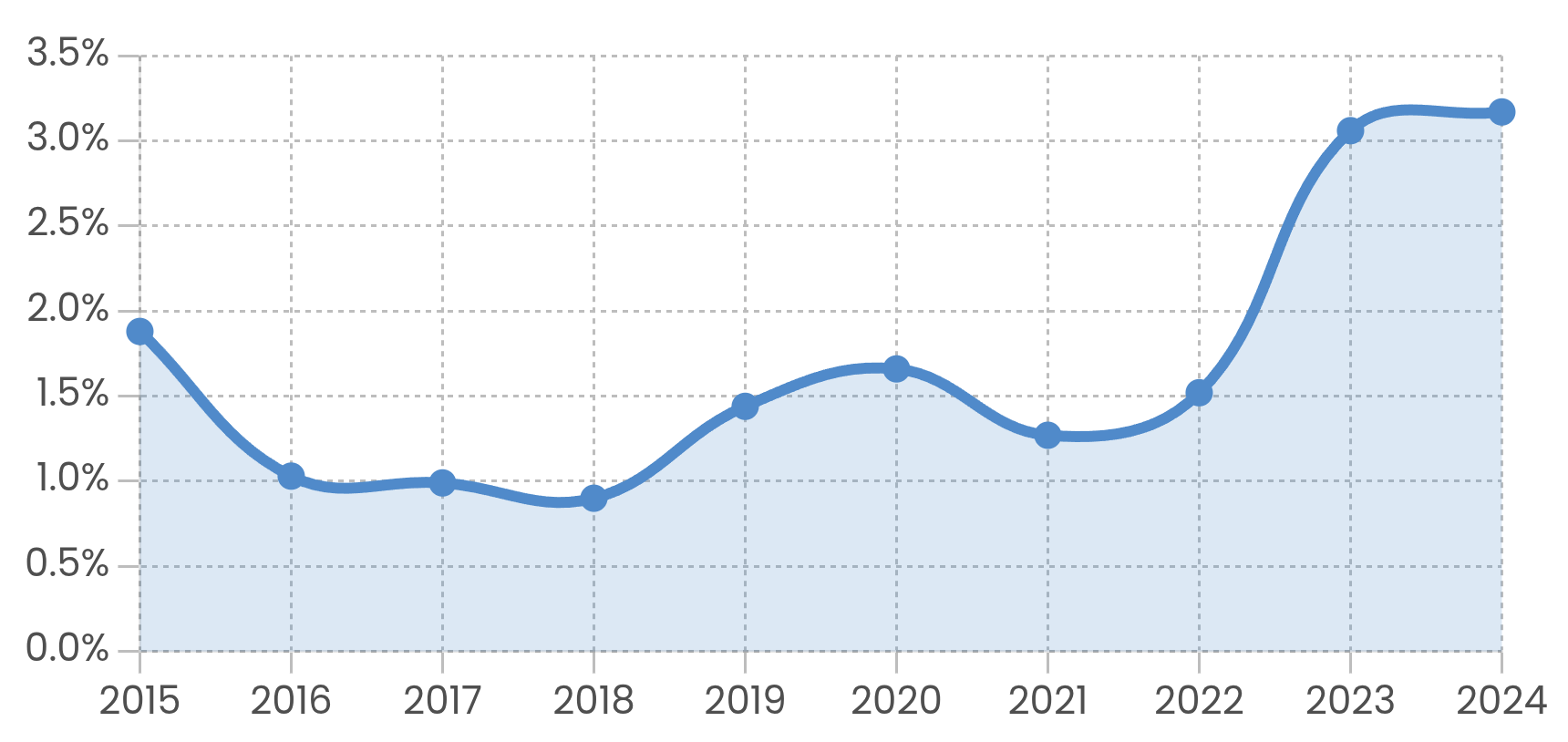
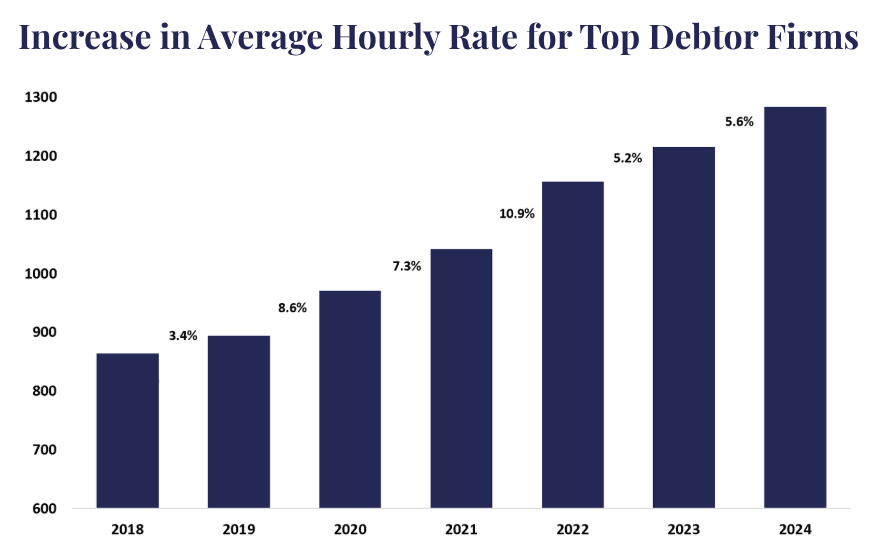
Our Take: The Daily Cost of BK Legal fees Are Increasing. Are we shocked? No. We took a deep dive to see what is driving up the daily cost of restructurings and the culprit: Increasing Legal Hourly Rates. We analyzed final fee apps for top debtor law firms from 2018 to 2024 and found average hourly legal fees have increased by over 65% since 2018. Maybe a little bit of sunlight is the right disinfectant to help remedy the problem… |
|
|
|
|
|
|