Creditor Corner

The ultimate weekly source for great financial and restructuring news affecting creditor rights specifically curated for you

Weekly News – January 16

Diameter's class act, Amazon takes it on the chin in Saks, coop agreements in spotlight, STG goes from LME to Bankruptcy, DLA sidelined, and much, much, more....

Creditor Corner

Your weekly curated content from the Creditor Rights Coalition

Over 3,500 member subscribers and growing!

We bring you exclusive content from leading data and research providers 

Sign Up Here

?In this Week's Creditor Corner

Diameter's class act, Amazon takes it on the chin in Saks, coop agreements in spotlight, STG goes from LME to Bankruptcy, DLA sidelined, and much, much, more....


Save the Date

2026 Credit Opportunities Symposium

with Keynote Speaker:

Steve Tananbaum
GoldenTree Asset Management

March 13, 2026

?Featured Content

Rene Canezin of Evolution Credit Partners

The credit market has a recovery problem, not a default problem.

Featured Content

Bruce Richards on the Markets

5.1% = Paradigm Shift with Economic Policy as the Catalyst

Scroll through to read all ou?r content?

Announcing Our 2026 Sponsors

Diamond Sponsor

Platinum Sponsors

Gold Sponsors

Silver Sponsors

Save the Date

2026 

Credit Opportunities Symposium

presented by:

Keynote Speaker:

Steve Tananbaum
GoldenTree Asset Management

For more information, including sponsorship opportunities, email info@creditorcoalition.org

Post of the week

Class Act

Click above to access content

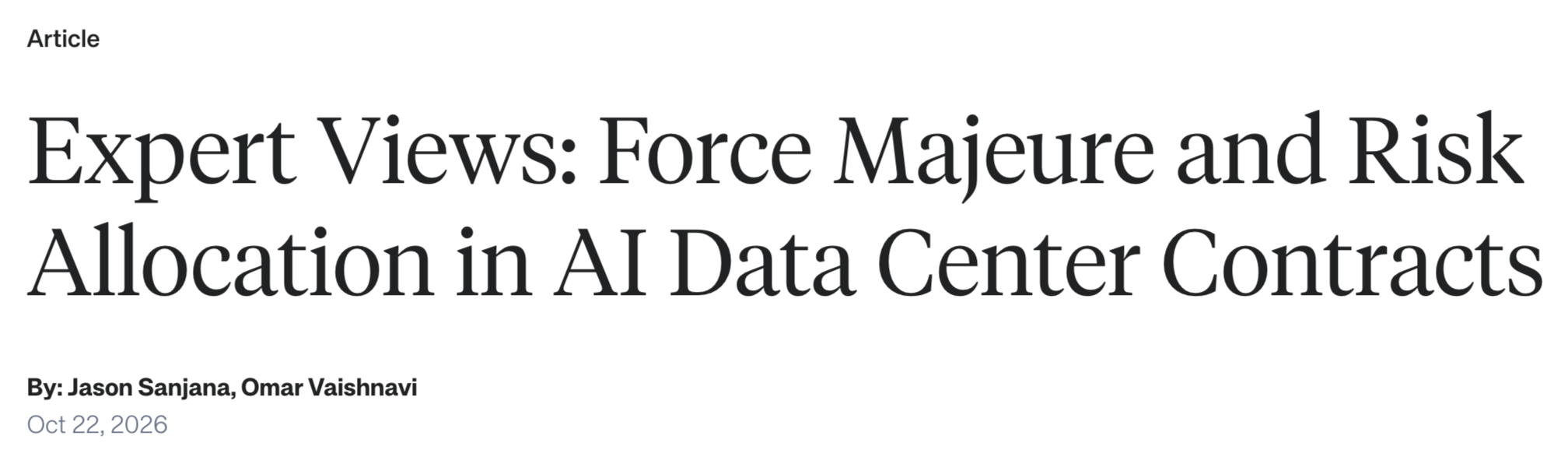
Exclusive Content

Amazon takes it in the chin...

Click above to access content

Featured Content

Webinar Recap

Cooperation Agreements & Antitrust: The Next Major Battle?

Click above to watch webinar

Read more here

Exclusive Content

LME Year in Review

Click above to access content

One-time registration required

Exclusive Content

STG loses major LME ruling earlier this month....

then immediately files for Bankruptcy!

Our take:

surprise, surprise, surprise... an October 2024 vintage LME files for bankruptcy within 18 months. This time in front of Judge Hall (NJ). We are hopeful newbie Judge Hall's prior commercial experience representing lenders will give excluded creditors a fair shot at pursuing their claims.

Exclusive Content

ethical conflicts afflict DLA

Click above to access content

One-time registration required

What we're reading

From the desk of Ira Dizengoff

Click above to access content

Featured Content


?The Supreme Court has had enough of bankruptcy issues for the moment. 

The highest court in the land denied certiorari in two significant bankruptcies this week. 

On Monday the Court declined to reconsider the Third Circuit’s Hertz decision, which found that the solvent debtor exception applied to permit the payment of certain post-petition interest and make whole premiums in the case. 

Similarly, the Court declined to reconsider confirmation of the plan in Boy Scouts, which certain claimants argue contains releases that would violate the Court’s later ruling in Purdue Pharma.

To subscribe to Back in the Black thoughts on restructuring and bankruptcy click here

Featured Content


The credit market has a recovery problem, not a default problem.

Over the past 12 months, recovery rates for both bonds and loans have collapsed. High-yield bond recoveries are around 36%, below their 25-year average of ~40%. More striking, leveraged loan recoveries have fallen to a record low near 36%, versus a long-term average of roughly 61%.

Senior secured loans are now recovering at levels historically associated with unsecured bonds, yet loan spreads are largely unchanged and in many cases near record tights. This is deeply concerning. Credit spreads are meant to reflect default probability and loss severity, but recoveries have effectively been cut in half while default rates — including bankruptcies and LME-style exchanges — have remained relatively stable at 2.5–3%. Spreads are clearly out of parity.

Distressed exchanges partly mask the problem. Including them boosts LTM recoveries; excluding them reveals the true loss severity. Losses are not disappearing — they are being managed, delayed, and obscured. 

The best analogy is shrinkflation: same price, same packaging, less product inside. Private equity has not repriced credit; it has repackaged it. Weaker covenants, primed capital structures, aggressive LMEs, and higher leverage have quietly eroded recoveries while investors remain anchored to legacy assumptions.

Bottom line: “Senior secured” no longer means what it used to. Recovery risk is being underpriced, and investors are being paid for yesterday’s capital structures, not today’s reality.

Click above to access content

Featured Content

5.1 = Paradigm Shift with Economic Policy as the Catalyst


There is a manufacturing boom getting underway in 2026, fueled by policy measures and technological advancement: tariffs, tax incentives, and AI. The President's tariffs have prompted nations (e.g., EU, Japan, Saudi Arabia, South Korea, UK, Vietnam, etc.) to negotiate deals for lower tariff rates in exchange for massive US investments representing several trillion dollars of cumulative commitments to bring back manufacturing including Roche, Hyundai, TSMC, while leading U.S. companies will onshore with large commitments coming from Apple, GM, Pfizer to fortify supply chains.


Companies are reshoring to dodge tariff risks, but also capitalize from the 100% bonus depreciation, allowing full immediate write-offs on machinery, equipment, production facilities, reducing after-tax costs and ROI that will drive growth.


The AI boom is estimated at $500B+ annual spend on data centers, chips, power equipment, cooling systems, semiconductors, and raw materials like copper, steel, and specialty alloys.


Industrial companies, (e.g., Caterpillar, Deere, Eaton, Freeport-McMoRan, Nucor, Steel Dynamics, Powell, GE) are seeing tailwinds from the industrial and AI buildout. Marathon views this as a massive opportunity in the years to come as credit facilities, term debt and asset-based finance will provide critical capital, flexible, and scalable funding solutions for these capital-intensive projects.


The Atalanta Fed who has the best GDP forecasting models in the business estimates Q1 GDP of 5.1%. When is the last time you remember U.S. GDP growing at 5% plus? Changing paradigm where tariffs + tax incentives for CapEx+ AI Buildout + record consumer wealth + public and private capital markets open for business = windfall growth. Capital allocators have much to consider; the time is now. Expect credit markets will have a record year of issuance. that can compound steadily, while remaining positioned for regime shifts that markets may be underpricing today.

To follow Bruce's thoughts on the markets, investing and more, follow

@bruce_markets

Upcoming Events

Octus Webinar: 2026 Distressed Crystal Ball

January 20, 2026

Learn More

AIRA & NYIC Luncheon: Bankruptcy & Fraud

January 21, 2026

Learn More

Akin Gump Webinar: Venezuela and the US: Policy Shifts, Trade, Sanctions, and Business Impact

January 21, 2026

Learn More

NYIC Annual Women in Credit

February 16, 2026

Learn More

CRC: 2026 Credit Opportunities Symposium

March 13, 2026

Learn More

The Data Download

Bringing Transparency to the Bankruptcy Process

Click Above to Access The Data Download

Our Take:

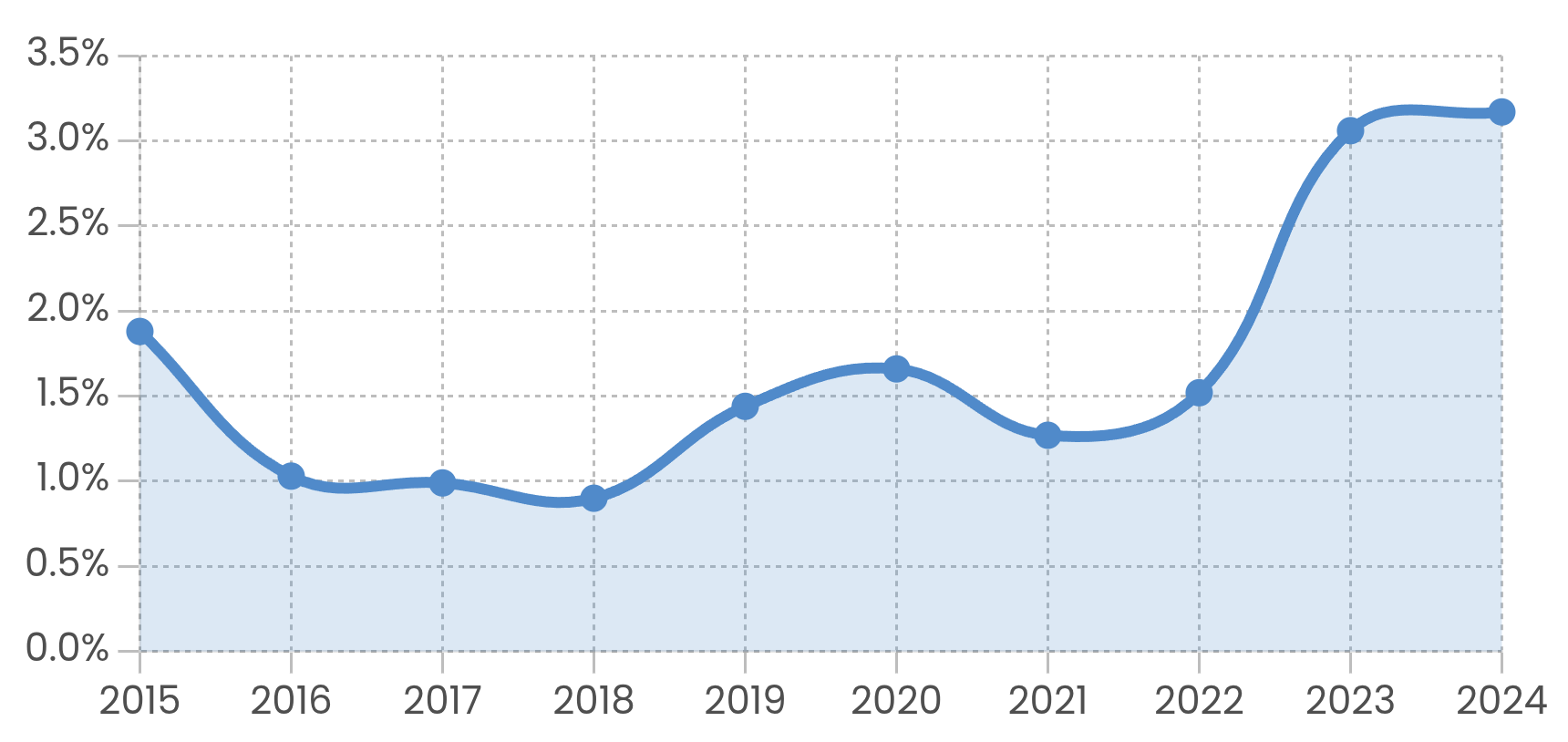
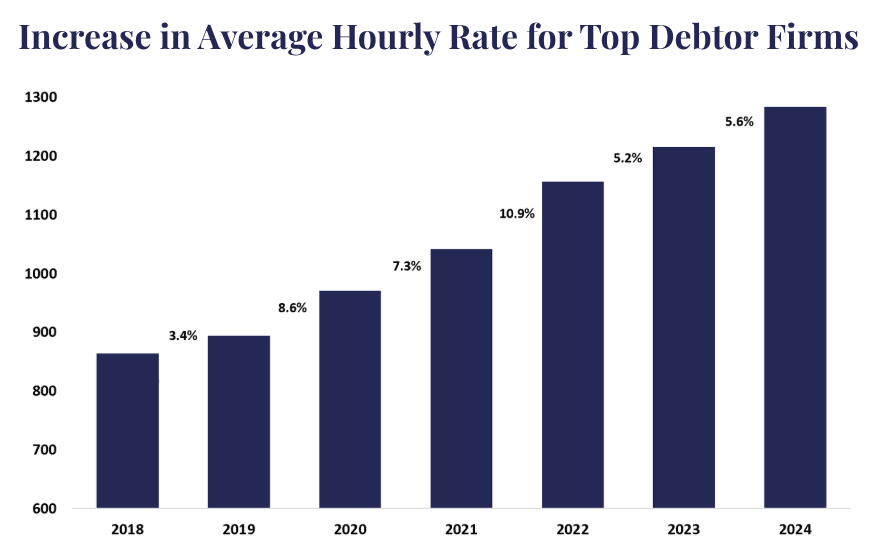
The Daily Cost of BK Legal fees Are Increasing.

Are we shocked? No.

We took a deep dive to see what is driving up the daily cost of restructurings and the culprit: Increasing Legal Hourly Rates. We analyzed final fee apps for top debtor law firms from 2018 to 2024 and found average hourly legal fees have increased by over 65% since 2018. Maybe a little bit of sunlight is the right disinfectant to help remedy the problem....

Have Something to Share?

Email us at info@creditorcoalition.org