Creditor Corner
|
|
|
|
Your weekly curated content from the Creditor Rights Coalition
|
|
Over 3,700 member subscribers and growing!
We bring you exclusive content from leading data and research providers
Sign Up Here
|
|
In This Week’s Creditor Corner
Weil’s failure of leadership, The Children’s Place on life support, Mercer unveils 400-million new financing prepack, LIV Golf swing and a miss, Private credit defaults record their largest quarterly jump, and much, much more…
Featured Content
Bruce Richards on The Markets
CCC Cowboys
|
|
Scroll through to read all our content
|
|
|
|
Tweet of the Week
|
 |
|
Click Above to Access Content
|
|
|
|
|
|
Exclusive Content
|
|
Weil’s failure of leadership
|
 |
 |
|
Click above to access content
One-time registration required
|
|
|
|
|
|
Exclusive Content
|
|
Sunk Cost?
|
 |
 |
|
Click above to access content
|
|
|
|
|
|
Exclusive Content
|
|
The Wonders of Prepacks
|
 |
|
Click above to access content
One-time registration required
|
|
|
|
|
|
In the news
|
|
Swing and a miss….
|
 |
 |
 |
|
Click above to access content
|
|
|
|
|
Featured Podcast
|
|
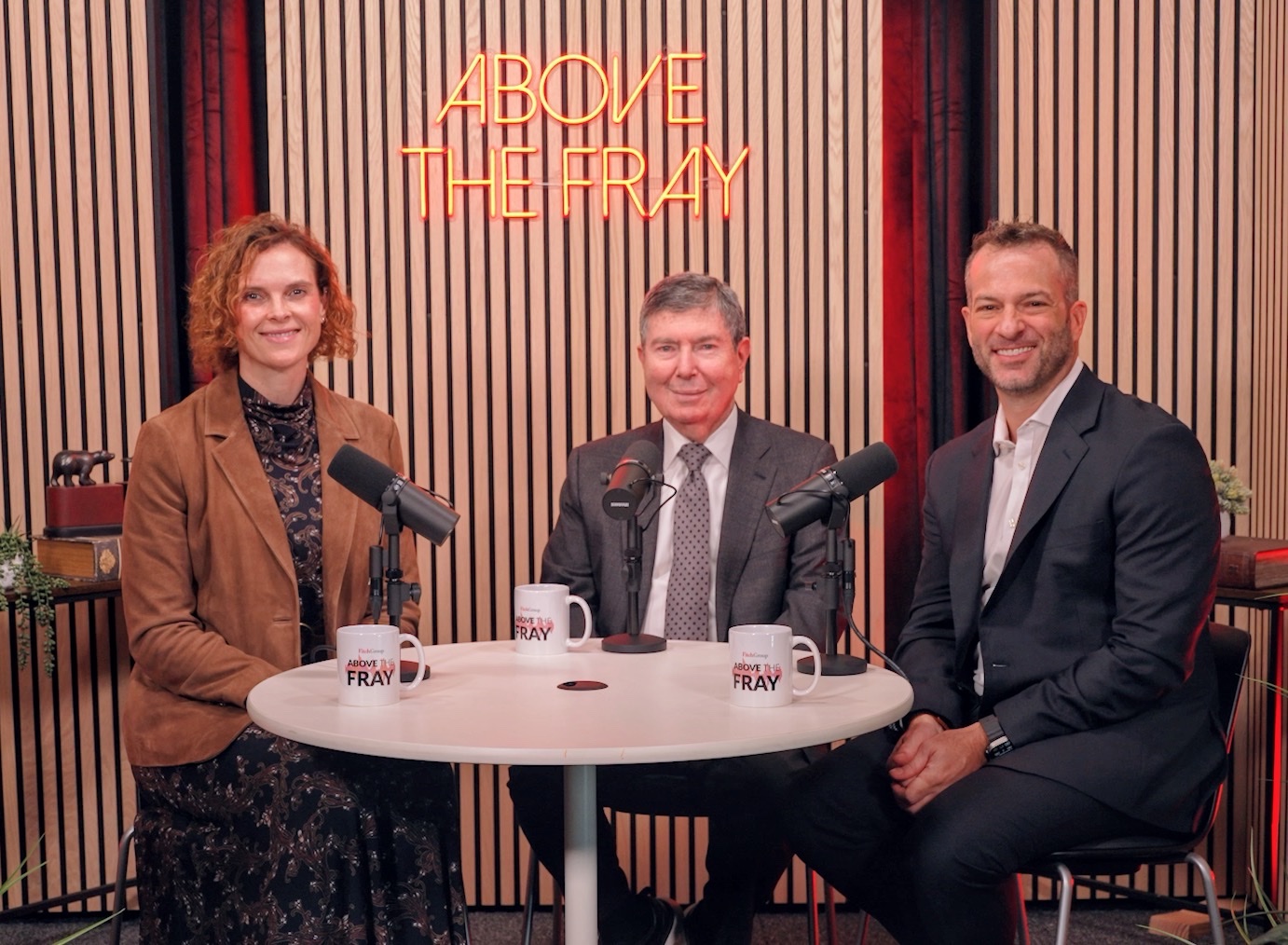
Systemic Risk, Then and Now: A Judge’s Perspective
|
 |
 |
|
Click above to access content
|
|
|
|
|
Featured Content
|
|
private credit cracking
|
 |
 |
|
Click above to access content
|
|
|
|
|
Featured Content
|
 |
|
CCC Cowboys
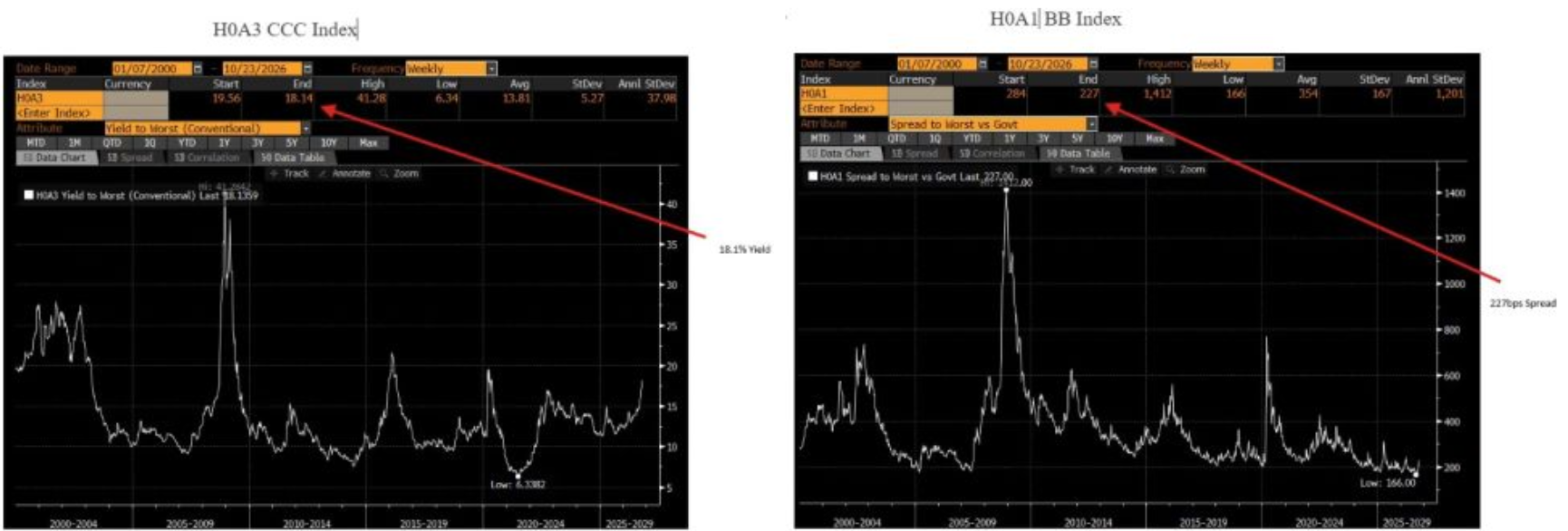
The BB High Yield Index began last week trading at just +227 basis points over Treasuries, suggesting excellent credit conditions, abundant liquidity and strong investor demand.
Meanwhile, the CCC High Yield Index began last week yielding 18.14%, signaling considerable financial distress among the weakest borrowers.
At no point in history has the CCC HY Index yielded more than 18% while the BB HY Index traded tighter than +400 basis points (see charts below).
CCC yields are hovering around 18%, while BB spreads tightened further to just +210 basis points.
How can the weakest credits perform so poorly when the economy and corporate earnings are so strong?
GDP expanded 3.4% in Q3, while S&P 500 corporate earnings have delivered exceptional growth, with another gangbuster earnings season underway (25% to 30% EPS growth).
The same divergence is evident in the broadly syndicated loan (BSL) market, where the amount of distressed loans has doubled thus far in 2026.
What explains this extraordinary disconnect?
Weaker borrowers are confronting maturity walls, liability management exercises (LMEs) that merely piled on additional debt without fixing underlying operational problems, over-levered businesses with elevated borrowing costs, changing consumer behavior and technological disruption, particularly across software sector.
This is severely impacting the weakest borrowers.
Consider the historical precedents. CCC yields exceeded 18% during the 2002 recession and telecom bust, the 2008 Global Financial Crisis, the 2016 energy collapse, the 2020 pandemic and the 2022 Fed tightening cycle.
In every instance, BB credits were also under considerable pressure, with spreads ranging from +400 to more than +1,000 basis points.
Not this time.
The credit market is increasingly separating winners from losers. Strong companies enjoy abundant access to capital at attractive rates, while weaker companies face prohibitively expensive financing, shrinking liquidity options, and deteriorating enterprise values.
Hedge funds loaded with CCC credits have become aggressive sellers, particularly those that unwisely employed leverage. The market is pricing over a 50% probabilty of default for CCC rated debt: S&P’s long-run data shows a cumulative default rate for CCC/C of 50% over 10 years.
Despite the YTD value destruction, there is plenty of opportunity in CCC companies that will not default. Significant returns can be earned as I believe that nearly 50% of CCCs will not default, offering the opportunity to purchase low double-digit coupons priced at considerable discounts to par.
The CCC Cowboys that invested in poorly performing businesses are hoping to weather this storm but there may be no way out. Selling your good CCCs does little to protect the capital invested in the remaining positions, but it does help deleverage, which the banks demand.
Storms pass, but deteriorating businesses with structurally unsound capital structures often do not.
|
 |
|
Click above to access content
To follow Bruce’s thoughts on the markets, investing and more, follow
@bruce_markets
|
|
|
|
|
|
Exclusive Content
|
|
Safe Harbor
|
 |
|
Click above to access content
One-time registration required
|
|
|
|
|
|
Exclusive Content
|
|
Benefit of the Doubt
|
 |
 |
|
Click above to access content
|
|
Our take:
In Serta, the company argued its exchange with a select group of lenders was an “open market purchase.” The Fifth Circuit read the phrase the way the loan market uses it, found the deal didn’t fit, and held the uptier breached the credit agreement. The Fifth Circuit once again finds itself front and center of a major loan market controversy. This time, it appears, the Fifth Circuit is more skeptical whether the indenture limited the coercive exchange in Incora. Hopefully, the decision doesn’t come out at 5pm on December 31!
|
|
|
|
|
|
|
|
 |
|
ABI: International North American Insolvency Symposium
|
|
November 10, 2026
|
| Learn More |
|
|
|
|
 |
|
Pitfalls and Best Practices for Lenders Who Become Owners
|
|
November 10, 2026
|
| Learn More |
|
|
|
|
|
 |
|
9fin: Restructure abroad, enforce at home — The rise of Chapter 15
|
|
November 12, 2026
|
| Learn More |
|
|
|
|
 |
 |
|
AIRA: Restructuring & Plan of Reorganization Conference
|
|
November 16, 2026
|
| Learn More |
|
|
|
|
 |
|
NCBJ: Avoiding Accidents at the Intersection of Bankruptcy and Corporate Governance.
|
|
November 17, 2026
|
| Learn More |
|
|
|
|
 |
|
Megawatts, Microchips and Meltdowns: Fragility in the AI Value Chain
|
|
November 19, 2026
|
| Learn More |
|
|
|
|
 |
|
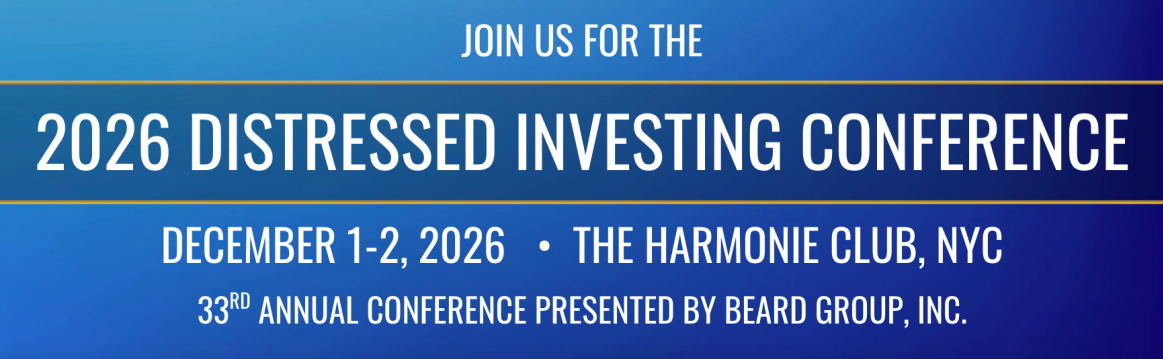
2026 Distressed Investing Conference
|
|
December 1-2, 2026
|
| Learn More |
|
|
|
|
 |
|
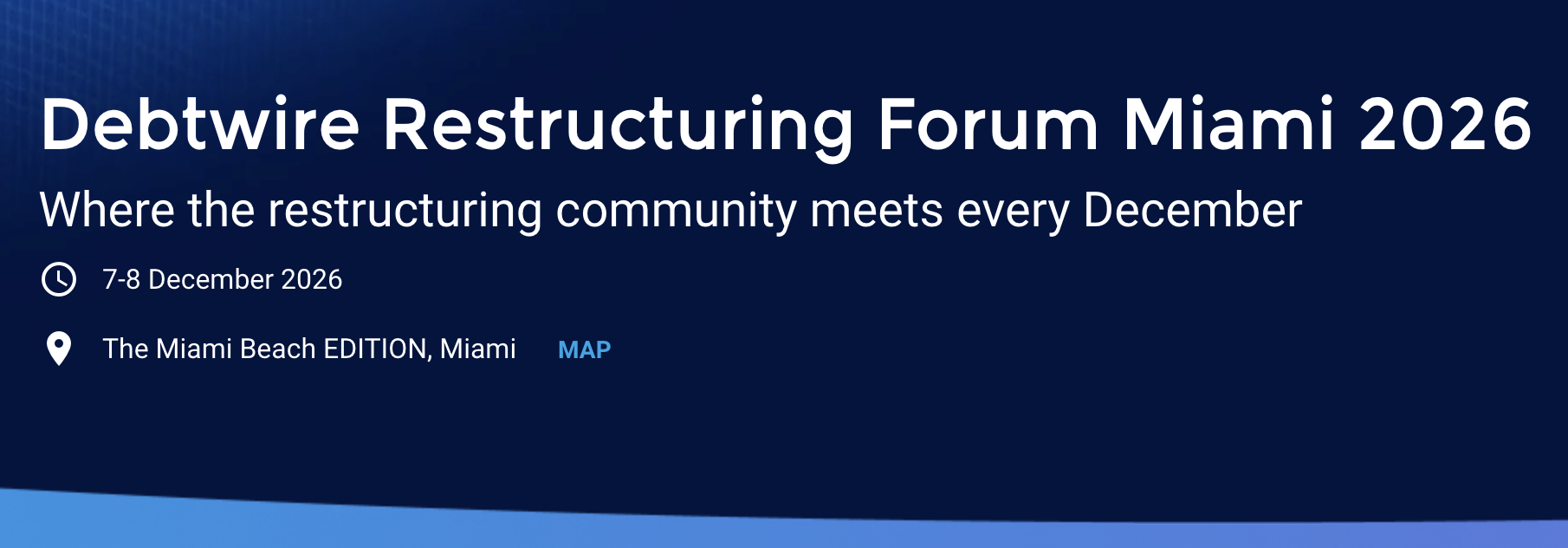
Debtwire Restructuring Forum Miami 2026
|
|
December 7-8, 2026
|
| Learn More |
|
|
|
|
 |
|
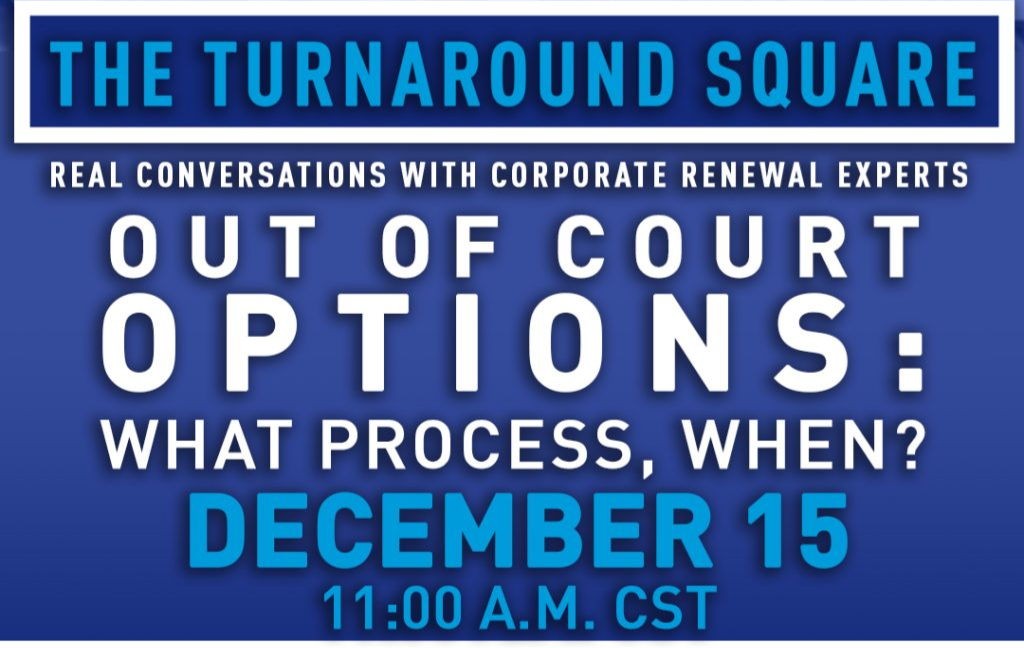
TMA Turnaround Square: Out of Court Options: What Process, When?
|
|
December 15, 2026
|
| Learn More |
|
|
|
|
The Data Download
|
|
Bringing Transparency to the Bankruptcy Process
|
 |
 |
 |
 |
 |
 |
|
Click Above to Access The Data Download
|
|
Our Take:
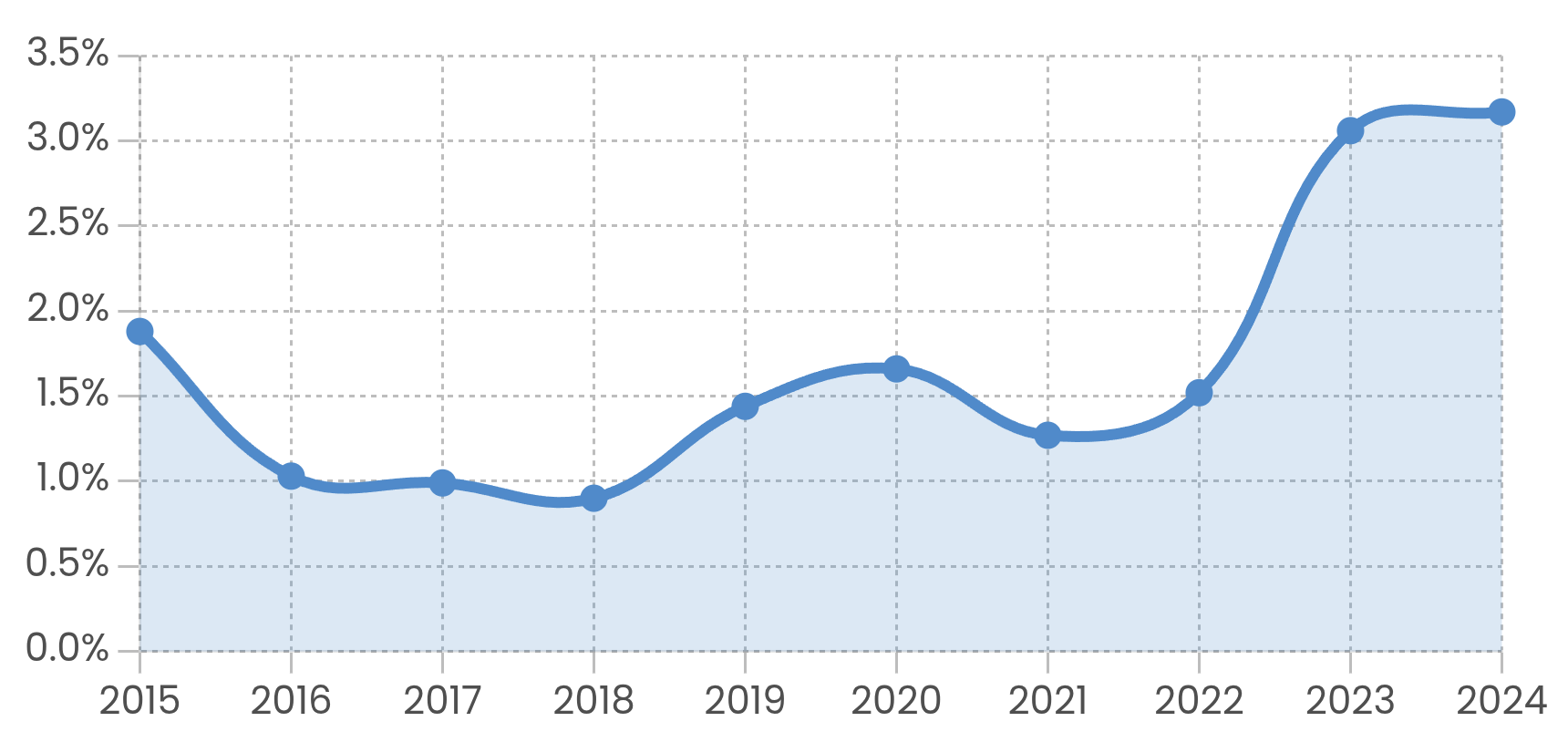
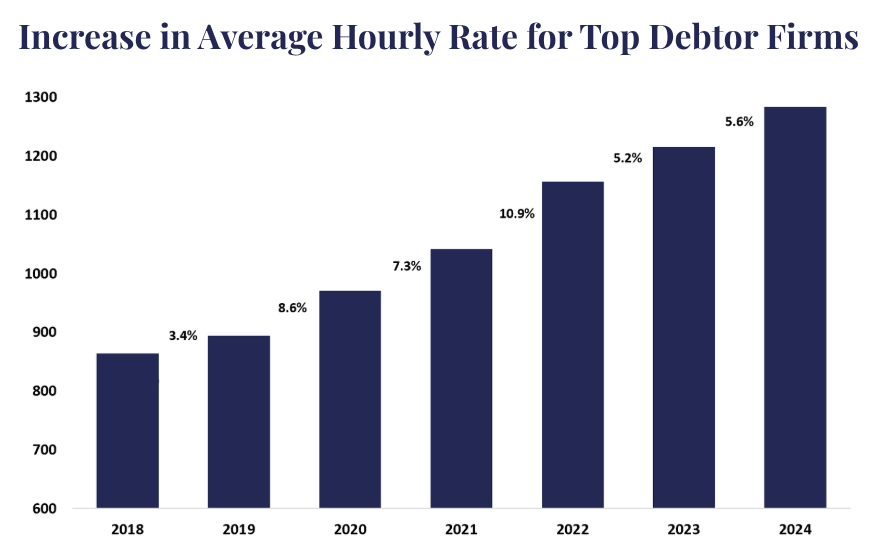
The Daily Cost of BK Legal fees Are Increasing.
Are we shocked? No.
We took a deep dive to see what is driving up the daily cost of restructurings and the culprit: Increasing Legal Hourly Rates. We analyzed final fee apps for top debtor law firms from 2018 to 2024 and found average hourly legal fees have increased by over 65% since 2018. Maybe a little bit of sunlight is the right disinfectant to help remedy the problem…
|
|
|
|
|
|
|