|
In bankruptcy, the FinCo lenders would be entitled to recover on the guarantee and intercompany claims against ParentCo, therefore benefiting from a double recovery. This is the foundation of the modern double-dip.
Where Pari-Plus Diverges
A pari-plus double dip preserves the double-dip architecture but adds something fundamentally threatening to legacy secured creditors: structurally senior claims against obligors outside the existing credit box, often foreign subsidiaries. This pulls previously unpledged assets into the new pari-plus financing allowing new-money lenders to sit above the existing secured stack without triggering priming mechanics. In the case of Sabre, Centerbridge was able to leap ahead of existing lenders on nearly a third of the company’s EBITDA through this “pari-plus” structure.
Why the Structure Survives Scrutiny
Explain this to a bankruptcy lawyer and you will quickly drown in hypotheticals. Distressed professionals tend to default (no pun intended) to “glass half empty,” and every structure has theoretical attack points. But two simplifying assumptions help clarify why these structures generally withstand such scrutiny:
-
Guarantees are joint and several — each ParentCo obligor is fully liable for the entire face value of the claim.
-
These are guarantees of payment, not of collection — enforceable immediately upon FinCo’s default rather than subject to certain conditions.
Sabre’s pari-plus financing relies directly on these principles.
Why Sabre is Different
This was not a privately-placed back-room exercise like the 2023 Centerbridge facility. Sabre:
? created the full pari-plus structure,
? pre-marketed it to the Street, and
? syndicated it into the public HY investor base.
This is the leap from bespoke LME weaponry to mainstream leveraged finance tooling. The engineering is not new, the distribution model is.
Two Interpretations
The Optimistic View
Debtors — and certainly arrangers — argue Sabre merely used its existing covenant capacity and corporate structure to provide a creative financing solution. If investors will fund structurally advantaged capital at attractive pricing, why should an issuer not pursue such cheap liquidity?
The More-Sinister View
Secured creditors see something far more aggressive: a company and often sponsor, subject only to capacity constraints, can now dilute secured recoveries on a syndicated basis, with no sacred-rights consent, no priming fight, and no dropdown transaction. The fulcrum now sits wherever the issuer chooses to manufacture it.
In-Court Implications: Murky and Dangerous
To date, no court has directly ruled on a modern, deliberately constructed pari-plus financing in a fully contested Chapter 11.
Whether courts will:
? respect these synthetic seniorities,
? collapse corporate separateness,
? recharacterize intercompany loans as equity,
? or attack the structure as a constructive fraudulent transfer,
is simply uncertain, particularly in the wake of more recent creditor-protective rulings (e.g., ConvergeOne, Serta) — in the SDTX, no less. You can read more about the legal uncertainties here: https://creditorcoalition.org/treatment-of-double-dips-in-bankruptcy/.
?What is certain: pari-plus gives new-money lenders considerably more negotiating leverage. The “Deal Away” was once a theoretical threat — now it has credible firepower behind it.
Why This is Historic for HY
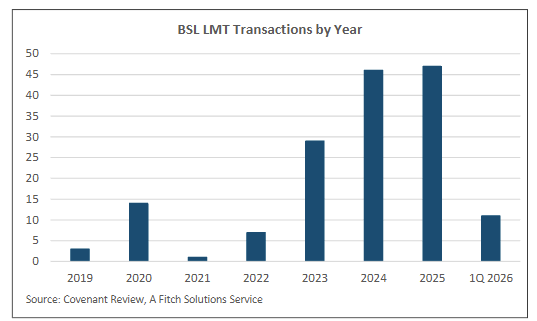
The Sabre issuance demonstrates that the market is now willing to pay for engineered structural seniority, not merely covenant protection. Banks have also shown they will underwrite and distribute these instruments to the broad HY investor base. This is the moment when double-dip engineering stops being boutique liability-management craftwork and becomes a standardized, repeatable product embedded directly into BSL structures. If history is any guide, the question is not whether the loan market adopts this technology, but when.
Bottom Line
For the HY market, this is a regime change. For secured creditors, it is an existential warning. For future restructurings, it marks the arrival of a structurally senior financing tool that courts have not yet fully confronted — but soon will.
Sabre didn’t invent the economics — it institutionalized them. By syndicating a pari-plus structure into the public HY markets, Sabre created the first widely distributed priming instrument that circumvents the traditional LME mechanics entirely: the first Sub Rosa LME.
Copyright Creditor Rights Coalition 2025
|