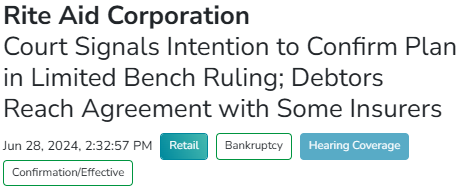
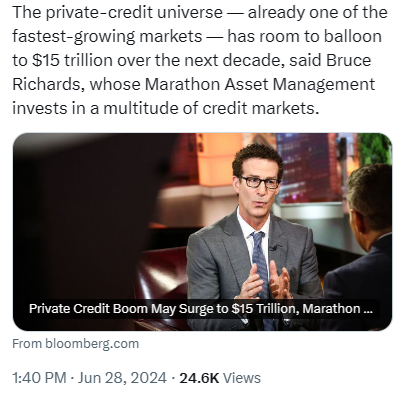
Purdue & Incora knock-out punches, no chicken soup for the soul, Rite Aid plan confirmed, private credit trends and much, much more…
ANNOUNCING OUR NEW DATA INITIATIVE
The Data Download
Scroll through to read all of our content
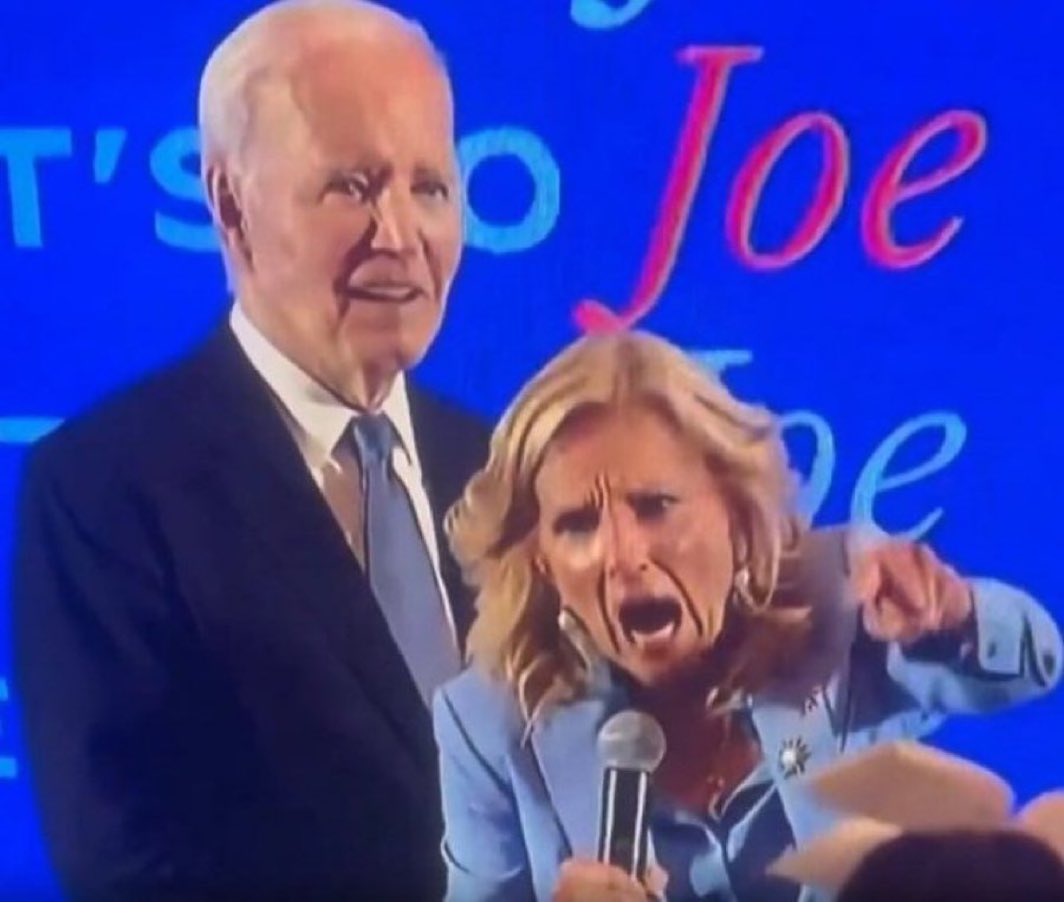
Tweet of the Week
laugh out loud…
Exclusive Content
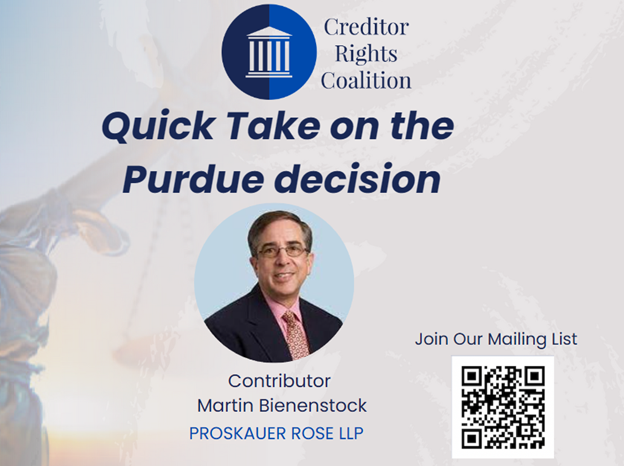
Purdue Knocked Out by SCOTUS!
Click Above to Access Content
Featured Content
The Supreme Court issued a majority opinion providing a straight-forward statutory interpretation concluding the Bankruptcy Code does not authorize nonconsensual non-debtor releases in chapter 11 cases not involving asbestos claims. Significantly, the majority expressly stated its ruling does not call into question consensual non-debtor releases, does not express a view as to what qualifies as a consensual release, and does not pass upon a plan that pays a third party’s creditors in full.
The Supreme Court did not expressly insulate other issues, but its failure anywhere in its reasoning to mention or to discuss them effectively leaves them for future cases, including all constitutional issues. One such issue is exculpation. Chapter 11 plans frequently exculpate the debtors’ officers and directors and statutory committees’ members, as well as the debtors’ and committees’ professionals and sometimes the primary creditors and their professionals. The basis for exculpation has been the Supreme Court’s ruling that a court can control litigation against officers of the court. To the extent some entities and persons traditionally receiving exculpation are not officers of the court, the Purdue Pharma ruling may bar exculpation. That said, nothing in the Purdue Pharma ruling bars a bankruptcy court from controlling litigation against third parties such as by designating itself as the forum for such litigation. This and other litigation controls will likely form parts of the workarounds for the absence of nonconsensual releases.
Notably, a combination of two conservative and two liberal justices dissented and provided a contrary statutory interpretation. While their statutory interpretation has inherent weaknesses (i.e., claiming the releases are not discharges, which the majority rightly termed “word games”), their passionate and lengthy reasoning shows their concern with undermining the ultimate outcome for the fifty states and thousands of victims losing the business deal the nonconsensual releases purportedly made possible. I say “purportedly” because the debtor has already requested a further stay of litigation to enable the parties to negotiate. It will not be surprising if the Sacklers agree to a rich substitute deal without nonconsensual releases to avoid litigation around the world financed by fifty states and plaintiffs’ lawyers.
Copyright Creditor Rights Coalition 2024
Stay Tuned….
More great coverage on the implications for the Purdue decision coming soon…
Announcing New Data Initiative to Analyze Bankruptcy Costs
Bringing Transparency to the Bankruptcy Process
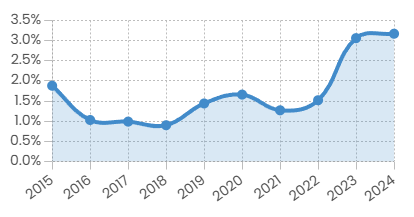
Legal Fees as a % of Liabilities on an Annual Basis
(All Cases Over $150 million)
Click Above to Access The Data Download
Our Take:
Legal fees have doubled the past two years.
Are we shocked? No.
Our proprietary analysis supports anecdotal evidence that bankruptcy has gotten more expensive. We will be providing additional analysis in the future to show how increasing UCC costs, forum selection and the length of the bankruptcy case affects fees. We hope our database will help make bankruptcy a more efficient forum for all stakeholders.
Exclusive Content
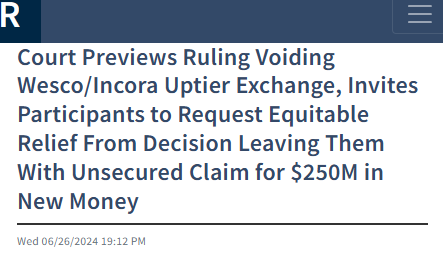
in a shocker, Isgur rejects new money put in through LME!
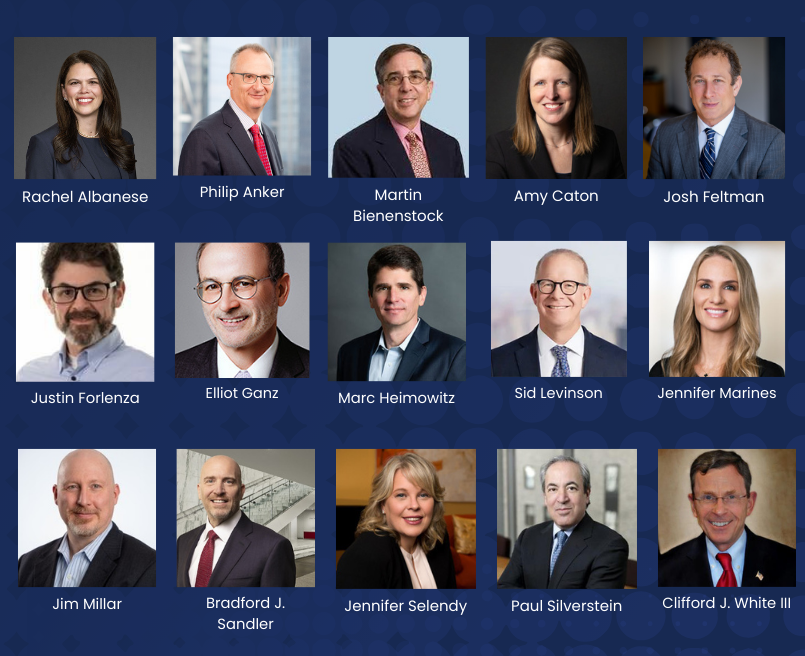
The views of our Contributors should not be attributed to their respective firms or the Creditor Rights Coalition. In addition, the Coalition may take positions as part of its Advocacy efforts that do not necessarily reflect the view of Contributors and should not be attributed to any Contributor.
Special Feature
Special Feature
Meet Our Sponsors
The CRC is funded through sponsorships from these organizations